Enjoy Endless Hot Water with a Tankless Water Heater Today!
Tankless Water Heater Solutions by PRO ROTO INC.
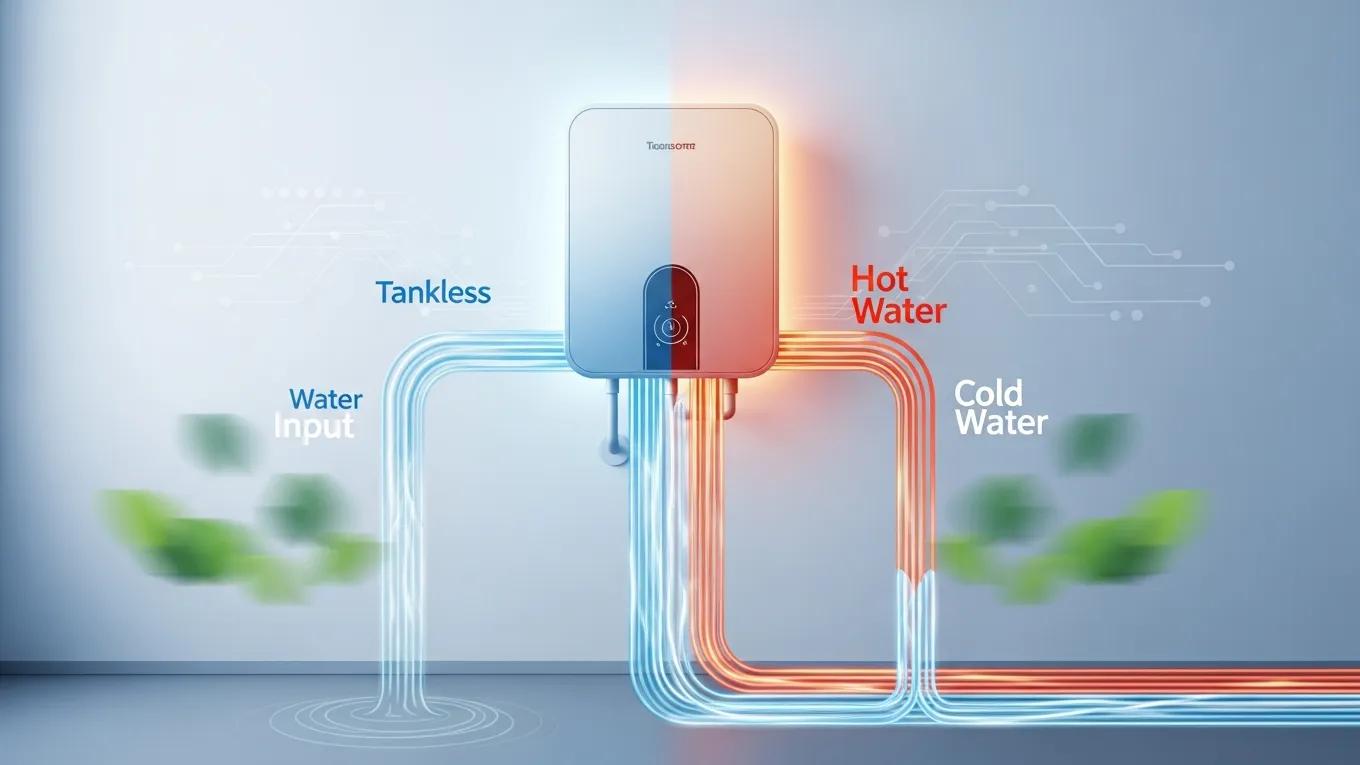
Tankless water heaters—also called on-demand or endless hot water systems—heat water only when you need it, sending hot water straight to fixtures without a storage tank. This guide walks through how on-demand units operate, why they frequently lower energy bills versus traditional tanks, and how to choose between gas and electric models for homes and businesses in Redwood City and the Bay Area. You’ll find practical sizing advice (GPM), a typical installation checklist and permit notes, side-by-side cost comparisons over time, and maintenance tips to extend the unit’s life. We also cover common repair issues, a straightforward buying checklist for residential and light-commercial sites, and the local service options PRO ROTO INC. provides for installation and ongoing care.
What Are Tankless Water Heaters and How Do They Work?
A tankless water heater is a compact system that heats water as it passes through a heat exchanger, using either gas burners or electric elements. Because there’s no hot-water storage, you avoid standby heat loss. When you open a tap, a flow sensor senses demand and triggers the burner or heating element, quickly bringing the water up to the set temperature before it reaches the fixture. As long as the unit’s flow capacity isn’t exceeded, it delivers continuous hot water. That makes tankless units suitable for point-of-use setups or as central systems sized for whole-house use. The main operational differences from traditional tanks are how heat is delivered and how energy is used, which also affects installation needs—venting for gas models or electrical upgrades for electric units. Knowing how the flow sensor, heat exchanger, and control logic work together helps you pick the right capacity and fuel type for your needs.
What Is an On-Demand or Endless Hot Water System?
An on-demand or endless hot water system only heats water when a faucet, appliance, or shower calls for it, so energy isn’t wasted keeping a tank hot. These systems are a strong fit for homes with staggered usage and for businesses that need sustained hot water during busy periods—think small cafés or salons—because they reduce wait time and support continuous service. With correct sizing, a single on-demand unit can support multiple simultaneous fixtures; for higher peak flow rates installers can run multiple units in parallel. For many Bay Area households, that means steady comfort and potentially lower utility bills compared with traditional storage systems.
How Does Tankless Water Heater Installation Differ from Traditional Systems?
Tankless installations usually take up less floor space but can require specific site work: gas models often need dedicated venting and might require gas-line upsizing, while electric units commonly need upgraded electrical service or dedicated circuits. Installing a conventional tank focuses on placement, drain pans, and relief valves, plus simpler venting for gas tanks. Tankless setups add considerations like hydronic routing, condensate management for condensing units, and precise vent termination locations. Permitting and inspections are similar, but on-demand units can trigger extra checks for combustion air, vent clearances, and electrical loads in Redwood City and nearby jurisdictions. Addressing these items during the site assessment reduces surprises during installation and helps ensure code compliance and expected performance.
What Are the Key Benefits of Tankless Water Heaters?
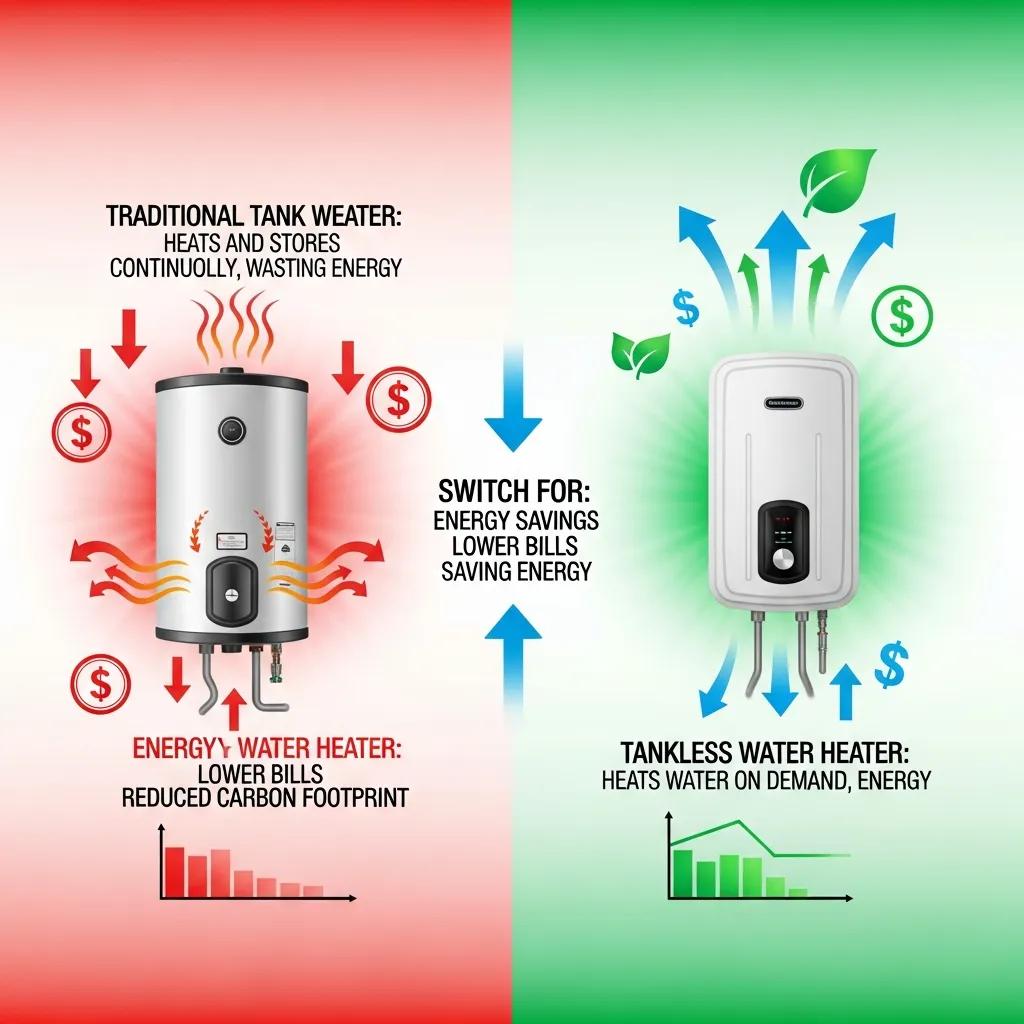
Tankless water heaters offer several advantages: better energy efficiency, a much smaller footprint, longer service life, and a lower environmental impact compared with many conventional tanks. Because they produce hot water only when needed, they eliminate standby heat loss and can deliver measurable energy savings for homes and small businesses. Compact, wall-mounted designs free up closet or garage space, and high-quality units often come with longer expected lifespans and warranties than storage tanks—reducing replacement frequency. For owners focused on sustainability, lower fuel use cuts greenhouse gas emissions, and modern condensing models can improve efficiency further when replacing older equipment.
The table below summarizes the main benefits and typical outcomes for quick comparison.
| Benefit Area | Characteristic | Typical Result |
|---|---|---|
| Energy Efficiency | On-demand heating eliminates standby loss | Lower annual energy use |
| Lifespan | Durable heat exchangers and serviceability | 20–30+ years of service |
| Space Footprint | Wall-mounted or compact placement | Frees floor/attic/closet space |
| Environmental Impact | Lower fuel consumption per hot water output | Reduced carbon footprint |
That comparison explains why many homeowners and businesses view tankless systems as a long-term upgrade. Actual savings and benefits depend on usage patterns and local energy prices; we explain those variables next.
How Do Tankless Water Heaters Save Energy and Reduce Utility Bills?
Tankless units save energy mainly by eliminating standby heat loss from a storage tank. Efficiency ratings like the Uniform Energy Factor (UEF) reflect real-world performance; modern on-demand units typically have higher UEFs than older tanks, which can translate to noticeable household savings depending on usage. Homes with moderate hot-water demand often see the biggest percentage reductions, while very high-demand properties may need multiple units to maximize savings. Accounting for water hardness and typical flow patterns during selection also improves durability and helps ensure the expected utility savings materialize.
Why Is Continuous Hot Water Supply Important for Homes and Businesses?
Continuous hot water removes cold shocks during simultaneous draws—important for large families, multiple-bathroom homes, or businesses like restaurants and laundromats where peak demand matters. When a tankless system is sized for peak simultaneous flow (measured in gallons per minute, GPM), it keeps temperatures steady across showers and appliances without the recovery delays you get from tanks. For businesses, reliable hot water improves customer experience and throughput; for homes, it removes the need to stagger showers or appliance use. If a single unit can’t meet peak demand, installers can recommend parallel units or zoning strategies to preserve continuous supply.
How Does the Compact Design Save Space in Residential and Commercial Properties?
Tankless water heaters mount on a wall and take up far less space than bulky storage tanks, so they fit in closets, utility niches, or even on exterior walls where allowed. That space savings is valuable in remodels, ADUs, and small commercial spaces where square footage is at a premium. Freeing up garage or mechanical-room floor area gives you more storage or renovation options without losing access to utilities. Smaller units can also be sited closer to high-use zones, reducing lag time and heat loss in long pipe runs.
What Is the Typical Lifespan of a Tankless Water Heater Compared to Traditional Units?
Tankless heaters generally outlast conventional tanks because they avoid corrosion and constant thermal cycling from stored water. High-quality units often run 20–30 years with proper maintenance. Longevity depends on factors like water hardness, how often the unit is descaled, installation quality, and whether parts are replaceable (flow sensors and heating elements, for example). Warranties and maintenance plans vary by manufacturer, and regular service—especially descaling in hard-water areas—extends useful life. Compare warranty coverage, expected maintenance, and spare-part availability when weighing long-term ownership costs.
How Do Tankless Water Heaters Reduce Environmental Impact?
Because they only use energy when hot water is needed, tankless systems reduce total fuel consumption and associated greenhouse gas emissions compared with many older storage tanks. Condensing tankless models recover extra heat from exhaust gases, boosting usable energy from the same fuel and lowering emissions further. Fewer tank replacements over time also reduce material waste. Choosing high-UEF units and keeping them well maintained ensures these environmental benefits are realized throughout the system’s life.
How Much Does Tankless Water Heater Installation Cost in Redwood City and the Bay Area?
Installation costs in the Bay Area vary with the unit price, labor, permits, and site-specific upgrades like venting, gas-line work, or electrical panel improvements. Gas tankless units typically cost more in equipment price than basic electric models, but gas often delivers higher continuous flow for whole-house use. Labor and permit fees in Redwood City depend on project complexity—upgrading a gas line or adding sealed-combustion venting increases the scope compared with a like-for-like replacement. A local site survey will produce a tailored estimate and clarify any required upgrades before work starts.
The cost components below outline typical categories and local ranges.
| Component | What It Covers | Typical Bay Area Range |
|---|---|---|
| Unit Cost | Gas or electric tankless unit price | $800–$3,000 (varies by capacity & brand) |
| Labor | Installation, plumbing, electrical, venting | $700–$2,500 (complexity-dependent) |
| Permits & Inspection | Local permits, code inspections | $100–$500 |
| Upgrades | Gas line, venting, electrical panel work | $500–$3,000+ |
These ranges are guidelines; final pricing depends on the specific site. A professional assessment provides the most accurate estimate.
Common factors that influence the total installation cost include:
- Fuel type and unit capacity, which affect equipment price and required upgrades.
- Site complexity—vent runs, accessibility, and existing piping layout.
- Required permits, inspections, and any third-party fees.
- Water quality and needed treatments (like softening) to reduce maintenance.
Understanding these drivers helps you compare long-term value instead of focusing only on upfront cost. If you want a tailored estimate, PRO ROTO INC. offers free quote assessments that evaluate sizing, upgrade needs, and permitting to produce a no-obligation plan.
What Factors Influence the Installation Cost of Tankless Water Heaters?
Key cost drivers are the unit’s rated capacity (GPM and UEF), fuel choice (gas or electric), and the extent of site upgrades such as venting or gas-line upsizing. Labor time increases with tight access, retrofitting existing piping, or adding condensate drains for condensing units. Local permitting and inspection requirements in Redwood City add administrative costs and can affect scheduling. Water hardness may require pre-treatment or ongoing descaling, which adds to both upfront and ongoing costs.
How Do Gas and Electric Tankless Water Heater Installation Costs Compare?
Gas units often cost more to install when venting and gas-line upgrades are required, but they usually provide higher continuous flow for whole-house applications. Electric models can be cheaper to install if your electrical panel and service capacity are sufficient; however, panel upgrades or dedicated high-amp circuits raise costs quickly. Operational trade-offs depend on local utility rates and usage patterns—gas may be cheaper per therm in some areas, while electricity rates (and heat-pump integration) change long-term savings. The right choice balances installation complexity, peak flow needs, and local energy pricing.
What Are the Long-Term Savings Versus Upfront Installation Costs?
Long-term savings come from lower energy use, longer service life, and less frequent replacements, but upfront costs can be higher for high-capacity or multi-unit installs. A break-even analysis compares annual efficiency savings to the higher initial expense; payback commonly falls between 7 and 15 years depending on usage, fuel prices, and system efficiency. Incentives, rebates, and lower maintenance on newer units can shorten payback. For an accurate assessment, request a site-specific ROI estimate that includes local energy costs and your household’s hot-water usage.
How to Choose the Best Tankless Water Heater for Your Home or Business?
Choosing the right tankless heater means weighing fuel type, required flow rate (GPM), efficiency (UEF), warranty and serviceability, and brand reliability. Correct sizing ensures comfort during simultaneous draws and determines whether one unit will suffice or multiple units are needed. Consider mounting location, maintenance needs given your water quality, and manufacturer support for parts and service. Use a measured peak demand and a professional sizing tool to avoid undersizing or overspecifying.
The table below gives a quick comparison of common tankless unit types and selection notes.
| Type / Brand | Fuel Type / Flow Range | Recommended Use / Notes |
|---|---|---|
| Electric (compact) | Electric / 0.5–6 GPM | Point-of-use or small homes; may need panel upgrades |
| Gas non-condensing | Gas / 4–9+ GPM | Whole-house use with venting; lower upfront cost than condensing |
| Gas condensing | Gas / 6–12+ GPM | High efficiency; requires condensate handling and quality venting |
| Manufacturer (example) | Reliability / Serviceability | Choose brands with accessible parts and strong local service networks |
Selecting a model balances upfront cost, long-term efficiency, and installer familiarity. For model-specific guidance, consult a qualified technician who can match GPM needs and installation constraints to recommended units.
Use this checklist when comparing models:
- Determine peak simultaneous flow (GPM) for showers, appliances, and fixtures.
- Compare UEF/efficiency ratings to estimate operating costs over time.
- Confirm venting and any gas or electrical upgrade needs at the proposed location.
What Are the Differences Between Electric and Gas Tankless Water Heaters?
Electric tankless units are usually simpler for point-of-use installs but can demand significant electrical capacity for whole-house use. Gas units provide higher flow rates and often lower operating costs in high-demand situations but require proper combustion venting and sufficient gas-line capacity. Electric units avoid combustion concerns and exhaust, which can simplify placement. Gas condensing models are very efficient but need condensate drains and corrosion-resistant components. The best choice depends on existing utilities, peak flow requirements, and whether your property can support the needed venting or electrical upgrades.
How to Size a Tankless Water Heater for Your Hot Water Needs?
Sizing starts with calculating simultaneous GPM—the combined flow of fixtures likely to run at once (for example, two showers plus a dishwasher). Add individual fixture flow rates to find peak demand and include a safety margin, then choose a model whose rated GPM at the expected temperature rise meets or exceeds that peak. Temperature-rise needs depend on incoming groundwater temperature—colder water requires higher capacity. For complex or commercial loads, a site survey will often recommend parallel or modular unit arrangements to meet continuous demand.
Which Brands and Models Are Recommended by PRO ROTO INC.?
We recommend manufacturers known for reliability, available replacement parts, and solid warranty coverage—especially important in Redwood City and the Bay Area where fast service matters. Look for high UEF ratings, clear service manuals, and models with field-replaceable components to minimize downtime. For model-specific recommendations tailored to your flow needs and site constraints, contact PRO ROTO INC. for professional advice and direct comparisons from our service team.
What Does Tankless Water Heater Installation and Maintenance Involve?
Professional installation typically follows a sequence: site assessment and load calculation, permitting, removal of existing equipment, mounting and fuel/electrical connections, venting (for gas), commissioning, and local inspections. Proper installation protects safety, performance, and warranty coverage and reduces premature failures. Regular maintenance—especially descaling in hard-water areas—keeps heat exchangers clear of mineral buildup and preserves efficiency. Knowing common failure modes and scheduled service needs helps owners plan maintenance contracts or DIY checks to extend system life.
Next, we list the standard installation steps so you understand the workflow before maintenance and repair details.
What Is the Step-by-Step Process for Professional Tankless Water Heater Installation?
Typical professional installations follow these steps: conduct an initial site assessment and load calculation; obtain necessary permits; remove any existing equipment; prepare mounting, venting, and fuel/electrical connections; install the unit and condensate lines where needed; run startup checks and calibrate controls; and schedule inspection and commissioning. Each phase includes safety and code verifications—combustion air, vent clearances, and electrical load checks—that installers document for local inspectors. Simple replacements can often be completed in a day; more complex upgrades involving gas-line or panel work may take multiple days.
PRO ROTO INC. technicians perform these steps with licensed, insured practices, handling site assessment, permit coordination, and installations with transparent pricing and same-day response when possible. Schedule and quote requests are available through our service channels for homeowners who want a tailored plan.
How Often Should Tankless Water Heaters Be Maintained and Descaled?
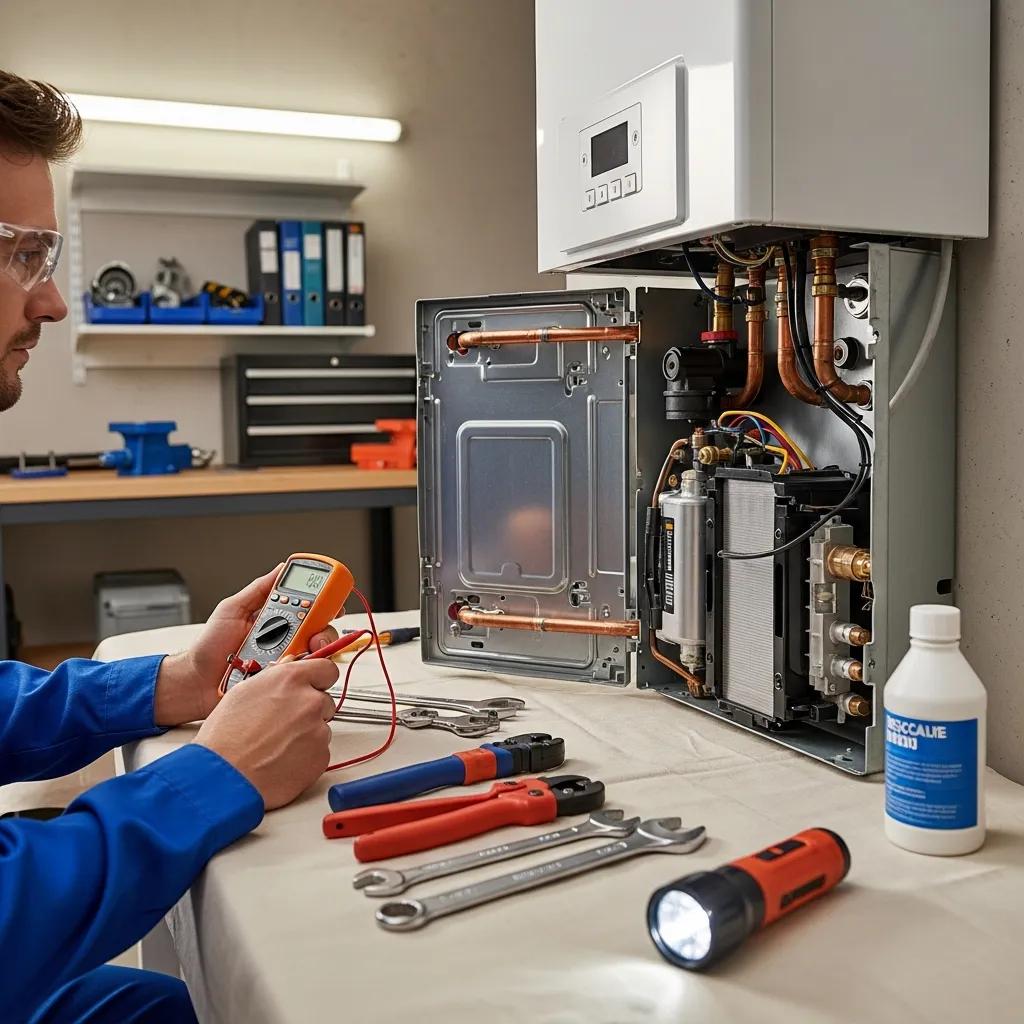
Maintenance frequency depends on water hardness and usage, but an annual professional service is a good baseline; in hard-water areas more frequent descaling is recommended. Descaling circulates a cleaning solution through the heat exchanger to remove mineral deposits, while technicians also inspect inlet strainers, burners, sensors, and venting. Regular filter cleaning and periodic sensor checks prevent common fault codes and keep the system efficient. Track service intervals and do simple visual checks between professional visits to spot leaks or performance changes early.
What Are Common Repair Issues and How Does PRO ROTO INC. Handle Them?
Common tankless issues include ignition failures, mineral buildup in heat exchangers, flow or temperature sensor errors, and vent or condensate problems—diagnostic codes usually point to the likely causes. Effective repairs require calibrated diagnostics, replacing sensors or control modules when needed, and descaling when mineral buildup is present. PRO ROTO INC. handles repairs with licensed diagnostics, emergency response and same-day service when feasible, and a preference for OEM-equivalent parts to restore reliable operation quickly. Prompt professional attention minimizes downtime and prevents cascading failures.
Why Choose PRO ROTO INC. for Tankless Water Heater Installation and Services in Redwood City?
PRO ROTO INC. is a Redwood City plumbing company serving the Bay Area since 2010. We provide full plumbing and water-heater services—installation, repair, and maintenance for gas and electric systems—with licensed and insured technicians (CA License #947961). Our service features include 24/7 emergency availability, same-day service where possible, upfront pricing, and a 100 percent satisfaction guarantee. For a limited time we’re offering a free advanced sewer camera inspection & line assessment that can be combined with a site assessment to plan efficient water-heating upgrades. Choosing a single local contractor simplifies permit coordination, inspections, and follow-up service.
What Makes PRO ROTO INC. Experts in Tankless Water Heater Solutions?
PRO ROTO INC. combines licensed technical expertise with a full range of plumbing services—emergency repairs, drain cleaning, sewer line work, water-line repair, leak detection, fixture installation, gas plumbing, and water-heater service. Our technicians follow code-compliant installation practices, document permit processes, and provide transparent estimates to reduce unexpected costs. That breadth of capability lets us accurately assess fuel-line or electrical upgrade needs, recommend properly sized units, and perform installations that meet Redwood City and Bay Area codes.
How Does PRO ROTO INC. Ensure Customer Satisfaction and Emergency Support?
We support customers with clear communication, upfront pricing, and service guarantees, plus emergency coverage through around-the-clock availability and fast dispatch where feasible. PRO ROTO INC. prioritizes quick diagnostics and practical repair plans to restore hot water promptly, and we provide follow-up documentation and maintenance recommendations to prevent repeat issues. These practices give homeowners and business owners confidence that service calls will be handled efficiently and transparently.
How Can You Request a Free Quote or Schedule Tankless Water Heater Service?
To get a no-obligation estimate, request a free quote assessment that includes unit sizing, venting and electrical or gas upgrade evaluation, and permitting guidance. Mention our current promotion for a free advanced sewer camera inspection & line assessment when you schedule. PRO ROTO INC. accepts service requests through standard contact channels and arranges site visits to deliver clear written estimates with scope, timeline, and pricing. For urgent repairs, emergency dispatch options are available, and scheduled maintenance plans can be arranged to preserve efficiency and longevity.
- Request a quote: Share your location and a short description of the hot-water issue or upgrade goals.
- Schedule a site assessment: A technician performs a load calculation and inspects installation constraints.
- Receive a written estimate: Includes recommended units, required upgrades, permit needs, and timeline.
This simple process moves property owners from research to a certified installation plan with local expertise.
Frequently Asked Questions
1. What size tankless water heater do I need for my home?
Size is based on peak flow rate (GPM) your household needs. Add the flow rates of fixtures likely to run at the same time—showers, dishwasher, washing machine—and choose a model that can meet that combined GPM with a safety margin. A professional installer can confirm sizing based on your specific layout and usage.
2. Are tankless water heaters more efficient than traditional models?
Yes—because they heat water only on demand, tankless heaters avoid standby heat loss and often have higher Uniform Energy Factor (UEF) ratings than storage tanks. That typically means lower energy use, but actual efficiency depends on correct sizing, installation, and local energy costs.
3. How would I know if a tankless water heater is the right choice for my business?
Businesses that need steady hot water—restaurants, salons, laundromats—can benefit from tankless systems. Evaluate peak hot-water usage, installation constraints, and compare expected energy savings to upfront costs. A plumbing pro familiar with commercial needs can offer specific recommendations for your operation.
4. What maintenance is required for tankless water heaters?
Regular maintenance keeps tankless units efficient and reliable—most owners schedule an annual service, with more frequent descaling in hard-water areas. Typical maintenance includes flushing and descaling the heat exchanger, cleaning filters, and inspecting burners and sensors. Routine service extends lifespan and prevents performance issues.
5. Can I install a tankless water heater myself, or do I need a professional?
Although some DIY-savvy homeowners consider installing point-of-use electric units, professional installation is recommended. Tankless systems require site assessments, proper venting, gas or electrical modifications, and code compliance. Licensed pros ensure safety, performance, and warranty protection while minimizing the risk of costly mistakes.
6. How does the warranty for tankless water heaters compare to traditional models?
Tankless heaters often carry longer warranties than conventional tanks—many high-quality models offer 10–15 year warranties on major components, reflecting the units’ longer expected lifespan. Traditional tanks commonly have shorter warranty terms (5–10 years). Review warranty details when comparing models to understand coverage and manufacturer support.
Conclusion
Switching to a tankless water heater can improve energy efficiency, deliver continuous hot water, and reduce long-term costs and environmental impact. To explore options specific to your property, contact the experts at PRO ROTO INC. for a personalized assessment and clear next steps.
Pro Roto Inc.
Licensed plumbing contractor serving the Bay Area since 2010. CA License #947961. Available 24/7 for emergency services.
(650) 269-0190
Need Professional Plumbing Help?
Our licensed plumbers are available 24/7 for emergencies. Call now for fast, reliable service!